

The Hidden Connection Between Poor Brushing Habits and Your Overall Health
Brushing is usually framed as a matter of appearance. The research of the past two decades has been interested in something else: whether the state of the mouth tracks the state of the rest of the body, and if so, how closely.
It is a genuinely open question, and it is worth setting out carefully — including the parts that are not settled.

Where it begins: the gums
Plaque that is left on the teeth hardens into tartar and irritates the gum margin. That early stage, gingivitis, is reversible with consistent brushing and a clean from a dental professional. Left alone, it can progress to periodontitis, an infection that damages gum tissue and the bone holding the teeth in place. Periodontitis is not reversible, though it can be managed.
The reason researchers look past the mouth from here is that periodontitis is a chronic inflammatory condition, and chronic inflammation is measurable elsewhere in the body. Everything below follows from that observation.
The heart: a real association, and an honest caveat
In December 2025 the American Heart Association published an updated scientific statement on gum disease and atherosclerotic cardiovascular disease. It describes a body of evidence linking the two, and two plausible mechanisms — oral bacteria entering the bloodstream, and systemic inflammation.
It is also candid about the limits. “Causality has not been established,” the statement says. Nor does it conclude that treating gum disease lowers cardiovascular risk: the trials that would settle that have not yet been run.
That is a more modest claim than the one usually made on this subject, and it is the accurate one.
Diabetes: the best-supported link
The relationship between gum disease and type 2 diabetes runs in both directions, and it is the most firmly established of these connections. Raised blood glucose makes gum infection more likely and harder to resolve; gum inflammation in turn makes blood glucose harder to control. Dentists do sometimes see the signs of undiagnosed diabetes in the mouth before a patient has been diagnosed anywhere else.
Pregnancy and the lungs: what the trials actually show
Hormonal change in pregnancy makes gums more reactive, and pregnancy gingivitis is common. Whether treating it changes birth outcomes is a separate question, and the answer is qualified: when Cochrane pooled the trials, it could not find clear evidence that treating gum disease in pregnancy makes preterm birth less likely, though it did find some sign of a reduction in low birth weight. Dental care in pregnancy is safe and worth having. It should not be sold as a way to prevent early labour.
The respiratory link is narrower than it is often described. Oral bacteria can be drawn into the lungs, and this matters most for older adults in care and for people whose swallowing or immune function is impaired — a population where mouth care measurably reduces pneumonia. For a healthy adult it is not a general risk.
The brain: interesting, unproven
Porphyromonas gingivalis, a bacterium associated with gum disease, has been identified in brain tissue from people who had Alzheimer's disease. It is a striking finding and it has generated a serious line of research. It is a hypothesis, not a conclusion, and it should be read as one.
What follows from all this
Read together, the evidence supports something less dramatic than the usual framing and more useful. Gum disease is common, it is largely preventable, it is treatable when caught early, and it keeps company with several serious conditions for reasons that are still being worked out. That is reason enough to look after the gums, without needing to claim that a toothbrush protects the heart.
The prevention itself is unremarkable: two minutes, twice a day, with a soft brush and a light hand; cleaning between the teeth, which no brush is shaped to do; and a check-up kept rather than deferred. Cochrane's review of powered toothbrushes found they reduce plaque by around 21 per cent and gingivitis by around 11 per cent over periods beyond three months, at moderate certainty — while cautioning that how much this matters clinically is still an open question. A real advantage, in other words, and a modest one beside the question of whether the brushing happens at all.
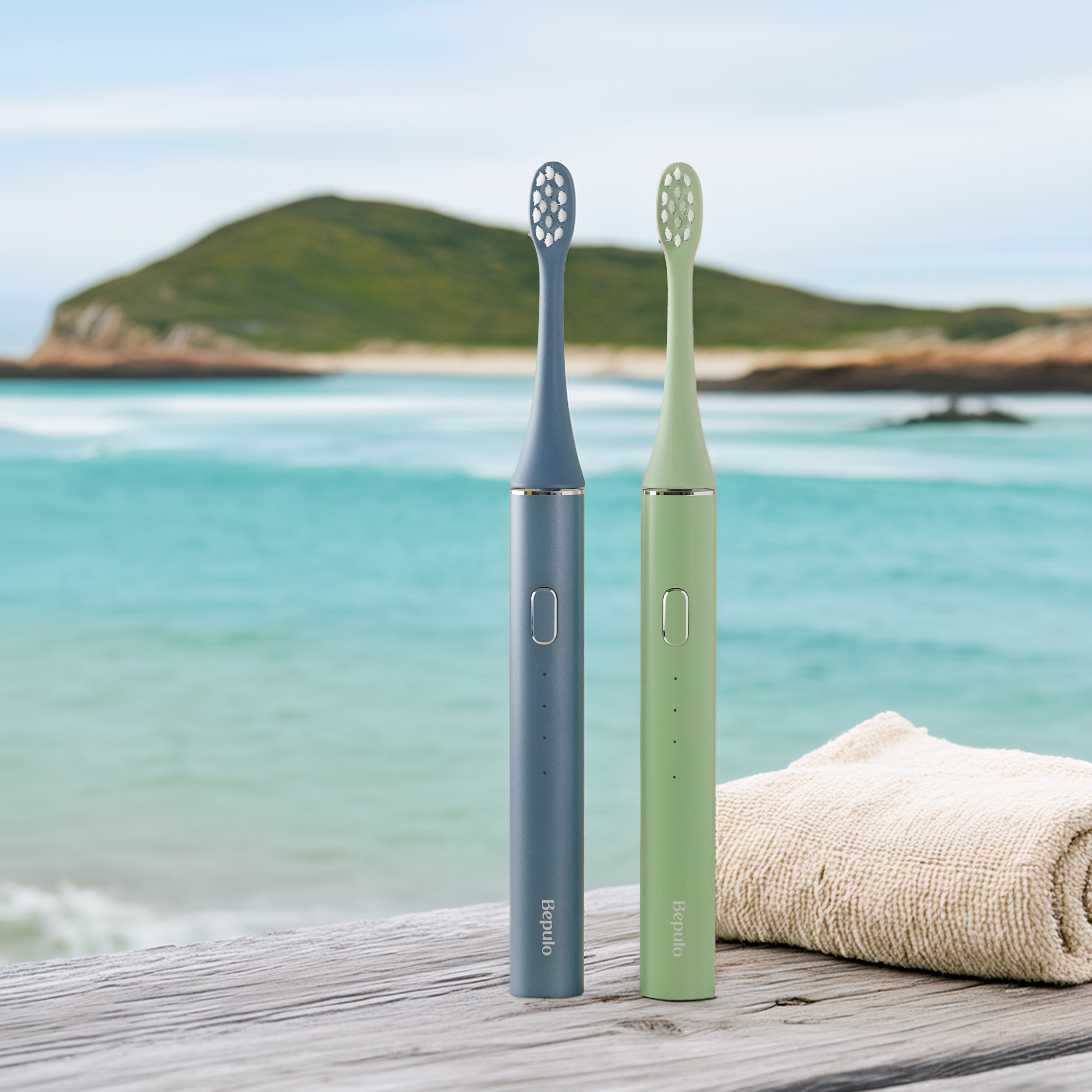
That is the standard we hold ourselves to. We make a sonic toothbrush with a two-minute cycle that marks each thirty seconds, and plant-based replacement heads that can be sent back to us through the Bepulo Loop rather than binned. We think it is a good brush. We would not tell you it does more than a brush can do.
Sources: American Heart Association scientific statement on periodontal disease and atherosclerotic cardiovascular disease, December 2025; Cochrane review, treating periodontal disease for preventing adverse birth outcomes; Cochrane review, powered versus manual toothbrushing for oral health.



Leave a comment
This site is protected by hCaptcha and the hCaptcha Privacy Policy and Terms of Service apply.